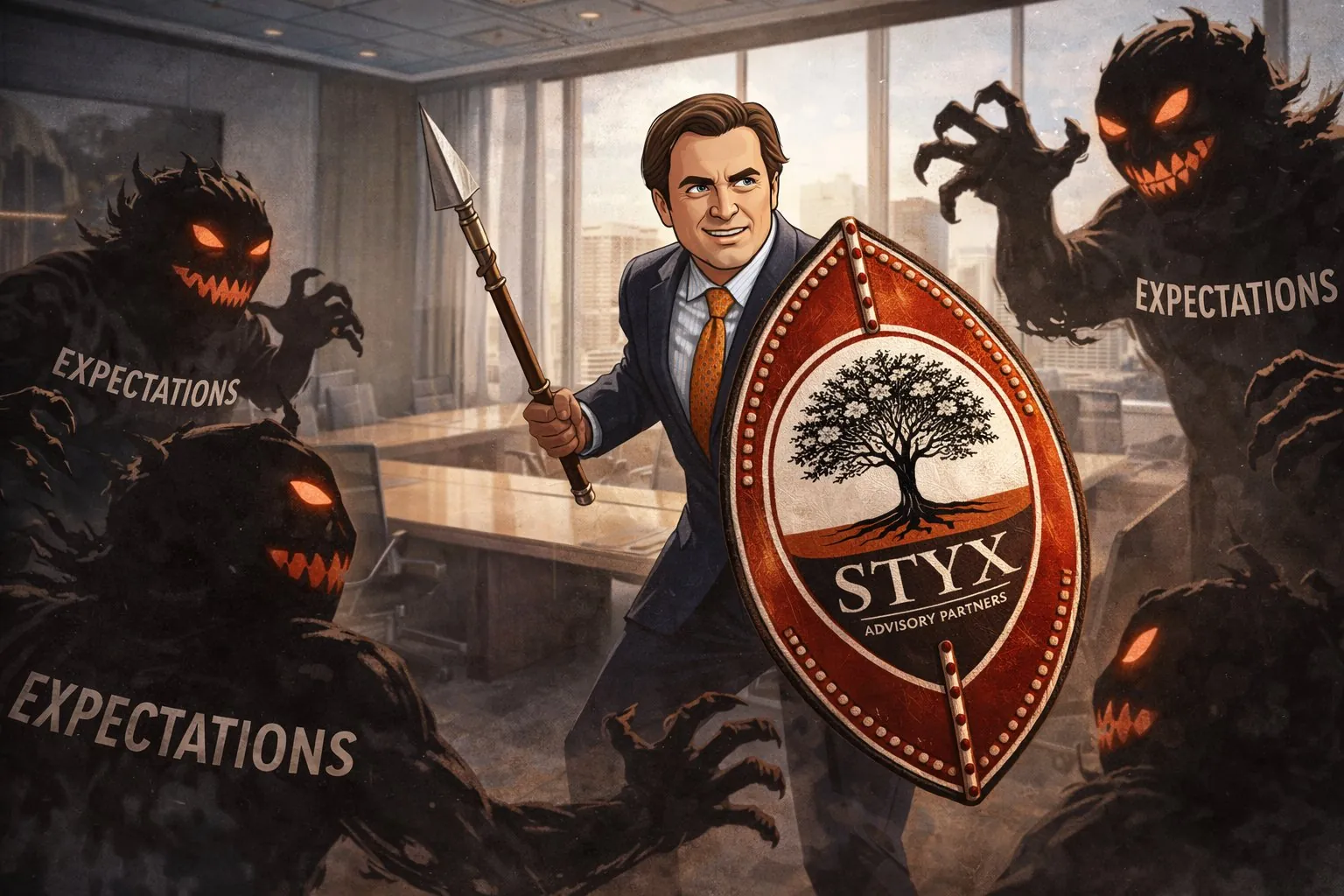
The voice the room
needs but won't produce.
Boards fail not from lack of information — but from lack of an independent voice willing to say what the data already shows. That gap, left unfilled, is often fatal.
Good governance isn't structure.
It's courage.
Three things most boards
have too little of.
An Independent Voice With Real Standing
Independence without credibility is just noise. Credibility without independence is captured counsel. The rare thing is both — a voice that has seen enough to know what it's looking at, and no stake in the answer being comfortable.
The Distinction Between Belief and Reality
Boards develop institutional beliefs about their companies. Those beliefs lag reality by design. The job of an outside advisor is to close that gap before the market does it for you.
Someone Who Can Name the Moment
Strategic inflection points look obvious in retrospect. In real time, they feel like ambiguity. The most valuable thing an advisor can do is name the threshold clearly — what this moment actually is, what it requires, and what the cost of inaction looks like.
When the board's belief
becomes the risk.
The Offer Was Fair.
The Board Said No. The Company Is Gone.
In 2019, we were engaged by the CEO and a board member of a publicly traded consumer apparel company to lead a strategic review and prepare the business for a potential sale process. We prepared the business thoroughly. The process was credible. A take-private offer emerged from a unique buyer — a party with genuine strategic rationale, not just a financial buyer looking for a turn.
The offer was not without complexity. But it was fair — a reasonable reflection of what the business was worth given its trajectory and competitive position.
The board rejected it.
The rejection was built on a premise that deserved harder scrutiny: that the business was worth more than the market was willing to pay.
The belief wasn't malicious — it was institutional. The board had watched the company through years of investment and effort. What was missing was an independent voice with enough standing to close the gap between that belief and operating reality.
No one in the room had both the independence and the credibility to say: the market is telling you something true, and you need to hear it. The offer was declined. The company subsequently went bankrupt.
Four things every board should hear before the moment arrives.
These aren't post-mortem observations. They're the questions worth asking now — while there's still time to act.
Rejecting a fair offer because you believe the business is worth more requires a specific, defensible thesis for how and when that value will be realized. Belief alone is not a thesis.
The longer the tenure, the harder it becomes to hear what the market is actually saying. Fresh eyes with deep experience are not a luxury — they are a structural necessity.
If no one in the room will say the uncomfortable thing — and be heard — the process is theater. The outcome will reflect the room's prior beliefs, not the actual analysis.
Strategic options erode. The company that could have been sold at a fair price becomes the company that can't be sold at any price. The time to engage with hard questions is before urgency removes the optionality.
What Styx brings
to the boardroom.
Strategic Review & Decision Support
We advise boards at moments of inflection — sale processes, capital raises, strategic pivots, governance transitions. Our role is to ensure the board is asking the right questions, not just the comfortable ones.
Belief vs. Reality Diagnostics
Before a process launches, we work with boards to close the gap between institutional belief and market reality. The time to discover a belief is wrong is before you've acted on it.
Transaction Preparation & Process Advisory
We prepare companies and boards for sale processes, capital raises, and take-private transactions. The work begins long before the process launches and continues through the moment the board must decide.
Mission Integrity Under Financial Pressure
For mission-driven organizations, capital events carry a specific risk: mission drift that is gradual and hard to name. We serve as the external voice that monitors that drift.